
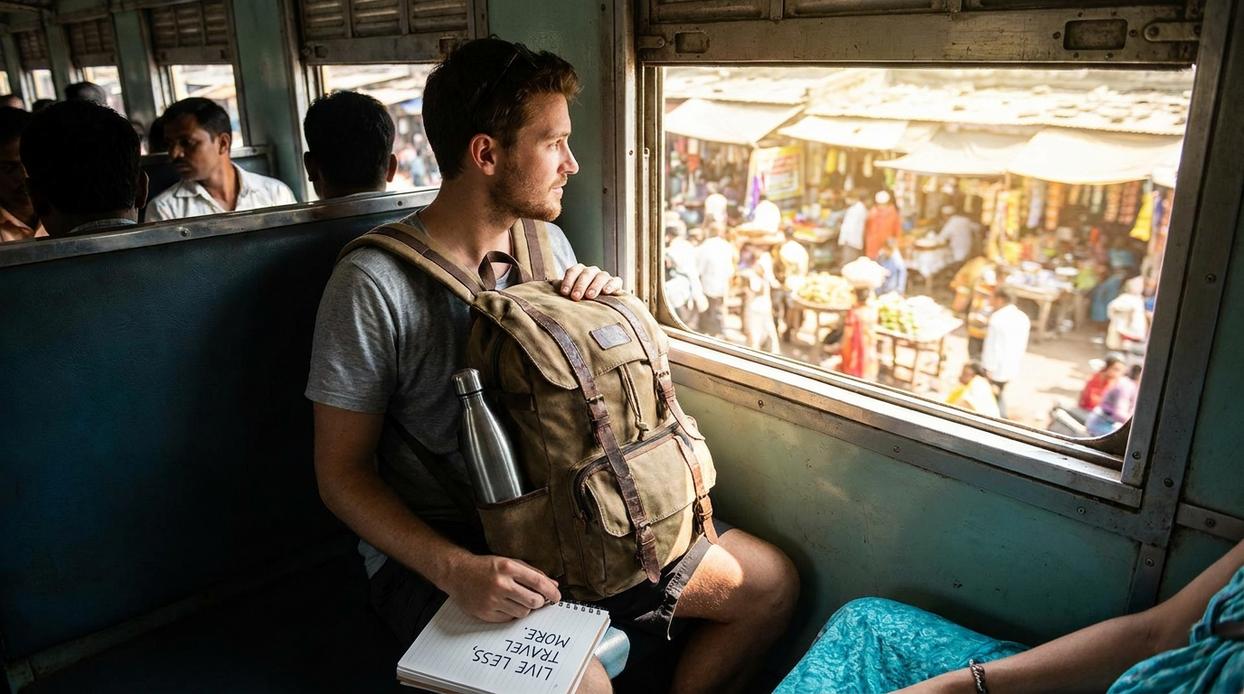
I’ve been to 47 countries and I’ve never paid full price for anything.
You want to see the world but your bank account keeps saying no. I’ve been there. Standing at my desk in Amesbury scrolling through flight prices that made my stomach drop.
Here’s the thing: travel doesn’t have to cost what Instagram makes you think it costs.
I figured out how to travel economically livlesstravel by making mistakes in hostels across Southeast Asia and learning which “budget hacks” actually work. Most advice you’ll find is recycled garbage that sounds good but falls apart when you’re standing at an airport gate.
This guide is different. I’m giving you the methods I actually use when I book trips.
You’ll learn how to cut costs without sleeping on park benches or eating gas station sandwiches for a week. Real strategies that let you stay longer and go further on whatever budget you’re working with.
I’ve tested every trick in this article. Some in places where one wrong move meant blowing my entire month’s budget in a day.
No fluff about “just travel more” or vague tips that don’t mean anything. Just the practical stuff that keeps me on the road instead of stuck at home wishing I could afford it.
The Foundation: Smart Planning and Booking Hacks
I’ll be honest with you.
The difference between spending $3,000 on a trip and spending $800 often comes down to just a few decisions you make before you even pack your bags.
Most people book the same way every time. They pick their dates, search one site, and click buy. Then they wonder why their friend went to the same place for half the price.
Here’s what actually works.
The Art of Flexibility
Being flexible with your travel dates saves more money than any other trick I know. We’re talking hundreds of dollars sometimes.
Tools like Google Flights’ “Everywhere” search let you see where you can fly cheapest from your home airport. You type in your dates (or leave them flexible too) and suddenly you’re looking at flights to Portugal for less than a domestic ticket.
The catch? You have to be willing to adjust. If you’re locked into specific dates for a specific place, you’re paying premium prices.
Beyond the Big Booking Sites
Here’s something booking sites don’t want you to know.
Airlines and hotels often offer better rates when you book directly with them. They’re not paying commission to the booking platform, so they can pass some savings to you. Plus you get better customer service when things go wrong (and sometimes they do).
I also check regional booking sites. Booking.com works great in Europe, but Agoda often beats it in Southeast Asia. It takes an extra five minutes but the savings add up.
Budget airlines are tricky though. That $29 flight to Barcelona looks great until you add baggage fees, seat selection, and printing your boarding pass. Read the fine print. Sometimes a slightly more expensive ticket on a regular carrier actually costs less overall.
Accommodation Secrets
Hotels eat up your budget fast.
I stay in hostels more than most people my age, but here’s the thing. Private rooms in hostels cost way less than hotels and you still get your own space. You’re just sharing common areas with other travelers (which is how to travel economically livlesstravel teaches you to meet people anyway).
Guesthouses work well too. They’re family-run spots that give you a real feel for a place without the hotel markup.
House-sitting is my favorite hack when I can swing it. You stay in someone’s home for free in exchange for watching their pets or plants. TrustedHousesitters and similar platforms connect you with homeowners. I’ve stayed in incredible places this way.
Timing is Everything
You know how flights cost more during holidays?
The same logic applies to entire seasons. Peak season means crowds and high prices. Off-season means deals but sometimes closed attractions or bad weather.
Shoulder season is the sweet spot. It’s the period right before or after peak season. You get decent weather, fewer tourists, and prices drop by 30% or more on flights and rooms.
For Europe, that’s April to May and September to October. For Southeast Asia, it depends on the region but generally November or March work well.
I flew to Greece in late September once. Perfect weather, half the tourists, and my hotel cost $45 a night instead of $120.
On the Ground: Your Daily Savings Strategy
You’ve booked the cheap flight. Found a decent hostel.
Now comes the part where most travelers bleed money without realizing it.
I’m talking about daily expenses. The stuff that adds up so fast you wonder where your budget went by day three.
Some people say you should just splurge on experiences and worry about money later. That the whole point of travel is to live in the moment and not stress about every dollar.
I hear that argument a lot.
But here’s what I’ve learned after years on the road. You can eat well, move around freely, and have amazing experiences without burning through your savings. You just need to know where locals actually spend their money.
Eat Like a Local
Tourist restaurants are designed to empty your wallet.
I skip them entirely. Instead, I look for street food stalls where you see a line of locals waiting. That’s usually your sign the food is good and the price is right.
Local markets are even better. You can grab fresh fruit, bread, and cheese for a fraction of what you’d pay at a sit-down place.
And here’s a trick that’s saved me hundreds. Look for lunch specials. In Spain and Latin America, they call it the menu del día. You get a full meal with multiple courses for what you’d pay for a single appetizer at a tourist spot.
Save Like a Pro
Public transportation is your best friend.
Buses and subways will get you anywhere you need to go. I’ve watched travelers spend $30 on a taxi when the metro costs $2 and gets there faster (traffic in Bangkok taught me that lesson).
Multi-day transit passes are worth it if you’re staying more than a few days. Do the math. If you’re taking three trips a day, a weekly pass usually pays for itself by day two.
Most cities have apps that show you exactly which bus or train to take. Download them before you arrive and you’ll navigate like you’ve lived there for years.
Free and Low-Cost Activities
The best parts of travel don’t cost anything.
I’ve had better experiences on self-guided walking tours than on those overpriced bus tours that herd you around like cattle. You move at your own pace and actually see the neighborhoods.
National parks usually charge minimal entrance fees. Sometimes nothing at all. Hiking costs you zero dollars and gives you views that no museum can match.
Public squares are where real life happens. Grab a coffee and watch the city move around you.
And check museum websites before you go. Most cities have free admission days once a week or month. I’ve seen world-class art collections without paying a cent just by planning my visit right.
Want to know how to travel economically livlesstravel style? It starts with doing what locals do instead of what guidebooks tell tourists to do.
Managing Money Abroad
Currency exchange fees will rob you blind if you’re not careful.
Airport exchanges are the worst. They know you’re desperate and they charge accordingly. I’ve seen rates that are 15% worse than what you’d get in the city.
Get a fee-free debit card before you leave. Charles Schwab and some credit unions offer them. You can pull cash from any ATM without getting hit with foreign transaction fees.
Here’s something that trips people up. When you pay with a card abroad, the machine might ask if you want to be charged in your home currency or the local one. Always pick local. The conversion rate they offer for your home currency is terrible.
I learned this the hard way in Croatia and watched an extra 8% disappear from my account.
Check out the hikers guide livlesstravel for more ways to stretch your budget on the trail.
Your daily spending habits make or break your travel budget. Get these basics right and you’ll stay on the road longer than you planned.
The Budget Traveler’s Mindset: It’s About Value, Not Cheapness
I still remember standing in a Barcelona market, holding a hand-painted ceramic plate I didn’t need.
Twenty euros. Beautiful, sure. But I’d never use it.
I put it down and spent that money on a cooking class with a local chef instead. Five years later, I still make her romesco sauce. The plate? I wouldn’t remember it.
That’s when it clicked for me. Budget travel isn’t about being cheap. It’s about knowing where your money actually matters.
Some travelers say you should save every penny possible. Skip the nice meal, avoid the paid tour, stick to free activities only. They think that’s how you travel longer.
But here’s what they’re missing. When you cut everything, you often cut the experiences that make travel worth it in the first place. You end up with a trip that feels hollow.
I do things differently. I pick one thing per destination to splurge on. Maybe it’s a food tour in Bangkok or a hot air balloon ride in Cappadocia. Everything else? I keep it simple.
The real secret is slow travel. I learned this after burning through my budget hopping between cities every few days. Transit adds up fast. Hotels for one or two nights cost more per night than weekly rentals.
Now I stay put for at least a week. I rent apartments with kitchens. Cook breakfast, pack lunches, eat out for dinner. It cuts my food costs in half and I actually get to know a place.
Speaking of saving money, I wrote a whole guide on how to travel economically livlesstravel style. It covers everything from finding cheap flights to stretching your budget on the road.
Packing light changed everything too. I fit everything in a carry-on now. No checked bag fees. No waiting at baggage claim. I can hop on a bus or train without struggling with luggage.
My go-to items? A merino wool shirt that doesn’t smell after multiple wears. Quick-dry pants that work for hiking and dinner. A sarong that becomes a beach towel, picnic blanket, or modest cover-up depending on where I am.
But the biggest money saver? Talking to locals. Not in a forced way. Just being open.
The best pho I had in Hanoi came from a recommendation by my Airbnb host’s mom. Three dollars for a bowl that would’ve cost fifteen at the tourist spot. The hiking trail outside Lisbon that locals use instead of the crowded paid tours.
You can’t Google this stuff. You have to ask.
Your Adventure Awaits—On Any Budget
You wanted to know if travel could fit your budget.
It can.
I’ve shown you the strategies that work. The ones that let you explore without emptying your bank account.
how to travel economically livlesstravel isn’t about cutting corners or missing out. It’s about being smart with your money so you can spend it on experiences that matter.
The idea that travel is only for rich people is wrong. I’ve seen it proven false over and over again.
When you combine good planning with simple daily habits, you open up the world. It’s not complicated. You just need to think differently about how you spend.
Here’s what you do next: Pick one tip from this guide. Apply it to your next trip idea today.
Maybe it’s booking flights on a Tuesday or staying in a neighborhood outside the tourist zone. Start small and see what happens.
The world is more accessible than you think. You don’t need to wait for the perfect moment or the perfect budget.
Stop dreaming and start planning.
Your next adventure is closer than it seems.
 Fynovox Wren is a passionate traveler, storyteller, and entrepreneur who believes that the world is meant to be experienced beyond guidebooks and tourist checklists. As the founder of Livless Travel, Fynovox created a platform inspired by the thrill of discovery, meaningful cultural connections, and the freedom that comes from exploring unfamiliar places. With a deep appreciation for both hidden gems and iconic destinations, the vision behind Livless Travel is to inspire people to embrace adventure with curiosity and confidence.