
I know why you’re here. You want a straight answer to what is the population of paris livlesstravel.
The problem is that most sources throw out different numbers without explaining what they’re actually counting. City limits? Metro area? It gets confusing fast.
I’m giving you the official numbers from France’s National Institute of Statistics and Economic Studies (INSEE). Not estimates or outdated figures. The real data from 2024.
Here’s what you need to know: Paris has two very different population counts. The city proper is one thing. The greater metropolitan area is something else entirely.
I’ll break down both numbers for you and explain why they matter.
You’ll also see how Paris’s population has changed over time and what’s driving those shifts. Because understanding the number means understanding the context behind it.
No fluff. Just the facts you came here for.
The Official Numbers: City of Paris vs. Greater Paris Area
You step off the Metro at Châtelet and the crowd pushes you forward like a wave.
The smell of fresh croissants mixes with diesel fumes. Voices bounce off stone walls in a dozen languages. This feels like millions of people.
But here’s where it gets confusing.
When you ask what is the population of Paris livlesstravel, the answer depends on what Paris you’re talking about.
The City of Paris (Ville de Paris) sits inside the Périphérique ring road. You know it when you drive that loop, watching the concrete barriers blur past your window. Inside those boundaries, you’ve got 20 arrondissements packed with about 2.1 million people according to INSEE.
That’s it. Just over two million.
Some people say this number doesn’t matter because nobody thinks of Paris as just the city center. They argue you should always use the metro area figure since that’s the real Paris experience.
But that’s missing the point entirely.
The Greater Paris Area (Île-de-France) sprawls across suburbs and satellite towns where the streets get wider and the buildings spread out. Here, the population jumps to over 12 million inhabitants. The air feels different out there. Less café smoke, more car exhaust on broader avenues.
Think about it like Manhattan versus the New York metro area. One is 1.6 million people on an island. The other is 20 million across multiple states.
The distinction matters when you’re planning a trip or reading statistics. Someone tells you Paris has 12 million people and you picture that density everywhere. But walk through the 7th arrondissement on a quiet Tuesday morning and you’ll hear your footsteps echo on empty sidewalks.
INSEE runs regular censuses to keep these numbers current. They count who actually lives where, not who visits or works there.
A City in Flux: Is Paris’s Population Growing or Shrinking?
Walk through the Marais on a Tuesday afternoon and you’ll see packed cafes and crowded streets.
So when I tell people that Paris is actually losing residents, they look at me like I’m crazy.
But the numbers don’t lie.
The Ville de Paris, that’s the city proper within the périphérique, has been shedding people for over a decade now. In 2015, about 2.2 million people called Paris home. By 2024, that number dropped to roughly 2.1 million (INSEE, 2024).
Some people say this doesn’t matter. They’ll tell you Paris is still Paris, still vibrant, still the cultural heart of France. And sure, they have a point about the city’s importance.
But here’s what they’re missing.
When you look at what is the population of paris livlesstravel, you need to understand why people are leaving. It’s not because they hate the city. It’s because they literally can’t afford to stay.
Housing costs have gone through the roof. We’re talking €10,000 per square meter in many neighborhoods. A family with two kids needs space, and that space costs a fortune in central Paris.
Then COVID happened. Suddenly everyone wanted a balcony. A spare room for an office. Maybe even (gasp) a small yard.
Good luck finding that in a 45-square-meter apartment in the 11th.
Now here’s where it gets interesting.
While the city itself shrinks, the greater Île-de-France region stays pretty stable. The metro area held around 12.2 million people in 2010, ticked up to about 12.3 million by 2018, and sits near 12.4 million today.
People aren’t leaving Paris. They’re just moving 20 minutes out on the RER.
Population Snapshot:
- 2010: City 2.25M | Metro 12.2M
- 2018: City 2.18M | Metro 12.3M
- 2024: City 2.1M | Metro 12.4M
What you’re seeing is classic decentralization. The urban core empties out while the suburbs fill up with families who still work in Paris but sleep in Versailles or Saint-Denis.
It’s the same pattern you see in London or New York. Dense historic centers become playgrounds for the wealthy and childless while everyone else gets pushed to the edges.
Who Lives in Paris? A Snapshot of Parisian Demographics
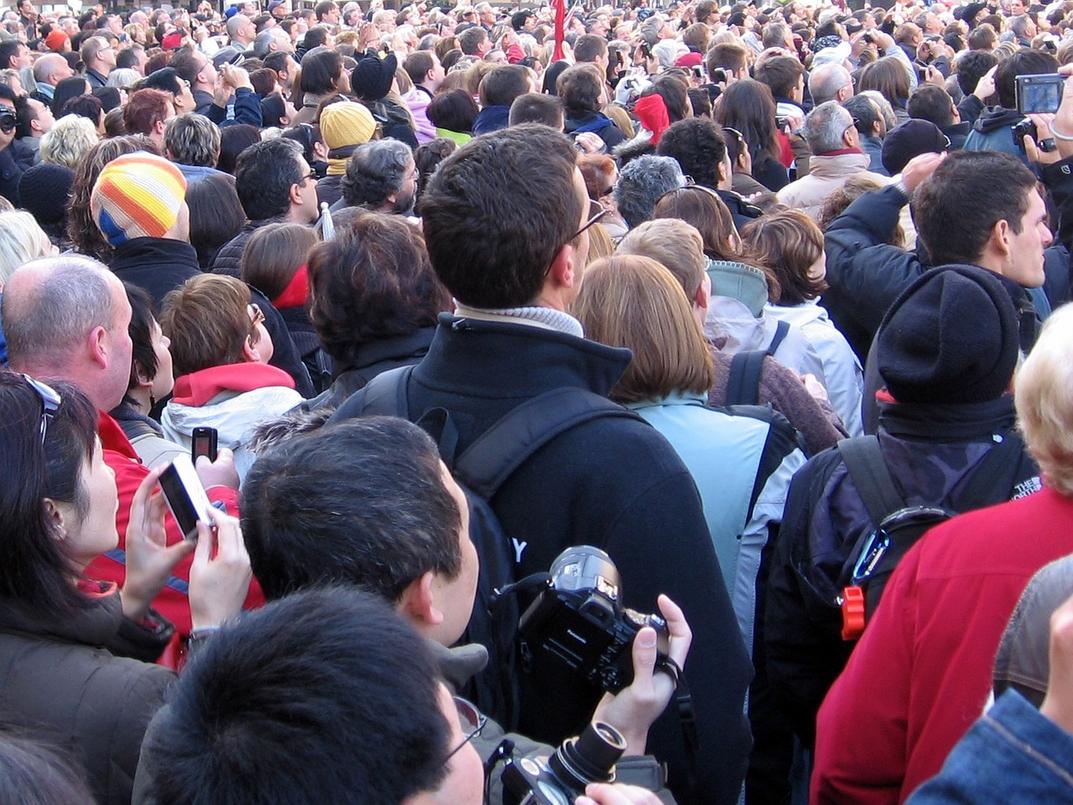
You step off the metro in the 11th arrondissement and you’re hit with it immediately.
The press of bodies. The hum of a dozen languages mixing with the smell of fresh bread and exhaust fumes.
Paris packs people in tight. We’re talking about one of the most densely populated cities in Europe. The central neighborhoods like the 11th can feel like a beehive, with over 40,000 people per square kilometer crammed into old Haussmannian buildings.
Walk to the 16th though? Different world. Tree-lined streets. Space to breathe. The density drops to around 15,000 per square kilometer.
This matters when you’re picking where to stay.
Now here’s something that surprises people. Paris skews younger than you’d think. About 40% of residents are under 30 (according to INSEE data from 2023). Students crowd the Latin Quarter. Young professionals fill shared apartments in the Marais.
But the city’s also aging. Nearly 15% of Parisians are over 65.
What really defines Paris? The mix.
Around 20% of residents were born outside France. You’ll hear Arabic in Belleville. Mandarin near Arts et Métiers. Portuguese in the 13th where the smell of grilled sardines drifts from corner cafés.
The top countries of origin? Algeria, Morocco, Portugal, and Tunisia.
Most Parisians live alone or in pairs. Single-person households make up nearly 50% of all residences. Makes sense when you see the apartments. A studio in the 5th might be 20 square meters with a window overlooking a courtyard that never sees sun.
When you’re thinking about which season should i travel livlesstravel, remember this density shifts with the calendar. August empties out. September fills back up.
what is the population of paris livlesstravel? About 2.1 million in the city proper. But that number tells you nothing about how it feels to walk through a neighborhood at rush hour.
Modern Factors Shaping Paris’s Population
You can’t talk about Paris without talking about its pull.
The city keeps drawing people in, even as the numbers tell a more complicated story. What is the population of Paris livlesstravel? It depends on how you count.
The city proper holds about 2.1 million people. But the greater Paris region? That’s closer to 12 million.
Here’s what’s actually happening.
The Economic Engine
Central Paris still runs the show when it comes to jobs.
The city’s business districts employ millions. Finance, tech, fashion, tourism. The opportunities cluster in the center, and people follow the work.
But here’s the shift. More Parisians are choosing to live 30 or 40 kilometers out while keeping their city jobs. According to INSEE (France’s national statistics institute), the suburbs grew by 0.6% annually between 2013 and 2020 while the city center stayed flat.
The math makes sense. A one-bedroom in the 11th arrondissement costs what a three-bedroom house in the outer suburbs does.
The Rise of Remote Work
Then COVID changed everything.
Some people say remote work killed cities. That everyone fled to the countryside and never looked back.
The data shows something different. A 2023 study by the Paris Region Institute found that 23% of workers in the Île-de-France region now work remotely at least three days a week (up from 7% in 2019).
But most didn’t leave entirely. They just moved further out. Fontainebleau, Provins, even parts of Normandy. Places that were too far for a daily commute suddenly became possible with two or three office days per week.
Urban Planning and Grand Paris Express
The Grand Paris Express is reshaping how people think about distance.
This massive metro expansion will add 200 kilometers of track and 68 new stations by 2030. It connects suburbs that never had direct links before.
I’ve watched construction sites pop up across towns that used to feel isolated. Saint-Denis, Rosny-sous-Bois, places that required multiple transfers to reach central Paris.
When a 90-minute commute becomes 35 minutes? People reconsider where they’re willing to live. The project is literally redrawing the map of what counts as accessible.
The Olympic Effect
The 2024 Olympics left their mark on specific neighborhoods.
Saint-Denis got the biggest transformation. New housing, upgraded transit, cleaned-up public spaces. The Olympic Village alone added 2,800 housing units that converted to residential apartments after the games.
Short term, some areas saw rent spikes. But the infrastructure improvements stuck around. The family travel guide livlesstravel crowd now explores neighborhoods they would’ve skipped two years ago.
Whether that translates to permanent population growth? We’ll know in another year or two when the dust settles.
Understanding Paris Beyond the Numbers
You came for a number and now you have it.
The most accurate population figures for both the city of Paris and its vast metropolitan region are in your hands.
Here’s what matters most: the historic city limits are seeing a slow decline in population. People are moving outward searching for more space and better prices.
When you understand the context behind the numbers, you see Paris differently. The demographics tell a story. The economic factors explain the shifts. You’re not just looking at statistics anymore.
This knowledge changes how you experience the city. Whether you’re planning a trip or considering a move, you now see Paris as it really is.
What is the population of Paris livlesstravel? It’s not just about counting residents. It’s about understanding a living city that keeps evolving.
Use this information to make better decisions. Plan your visit with realistic expectations about crowds and neighborhoods. If you’re thinking about relocating, you know which areas are growing and which are shrinking.
Paris remains one of the world’s great cities. Now you understand why the numbers matter and what they mean for anyone who wants to experience it.
 Fynovox Wren is a passionate traveler, storyteller, and entrepreneur who believes that the world is meant to be experienced beyond guidebooks and tourist checklists. As the founder of Livless Travel, Fynovox created a platform inspired by the thrill of discovery, meaningful cultural connections, and the freedom that comes from exploring unfamiliar places. With a deep appreciation for both hidden gems and iconic destinations, the vision behind Livless Travel is to inspire people to embrace adventure with curiosity and confidence.